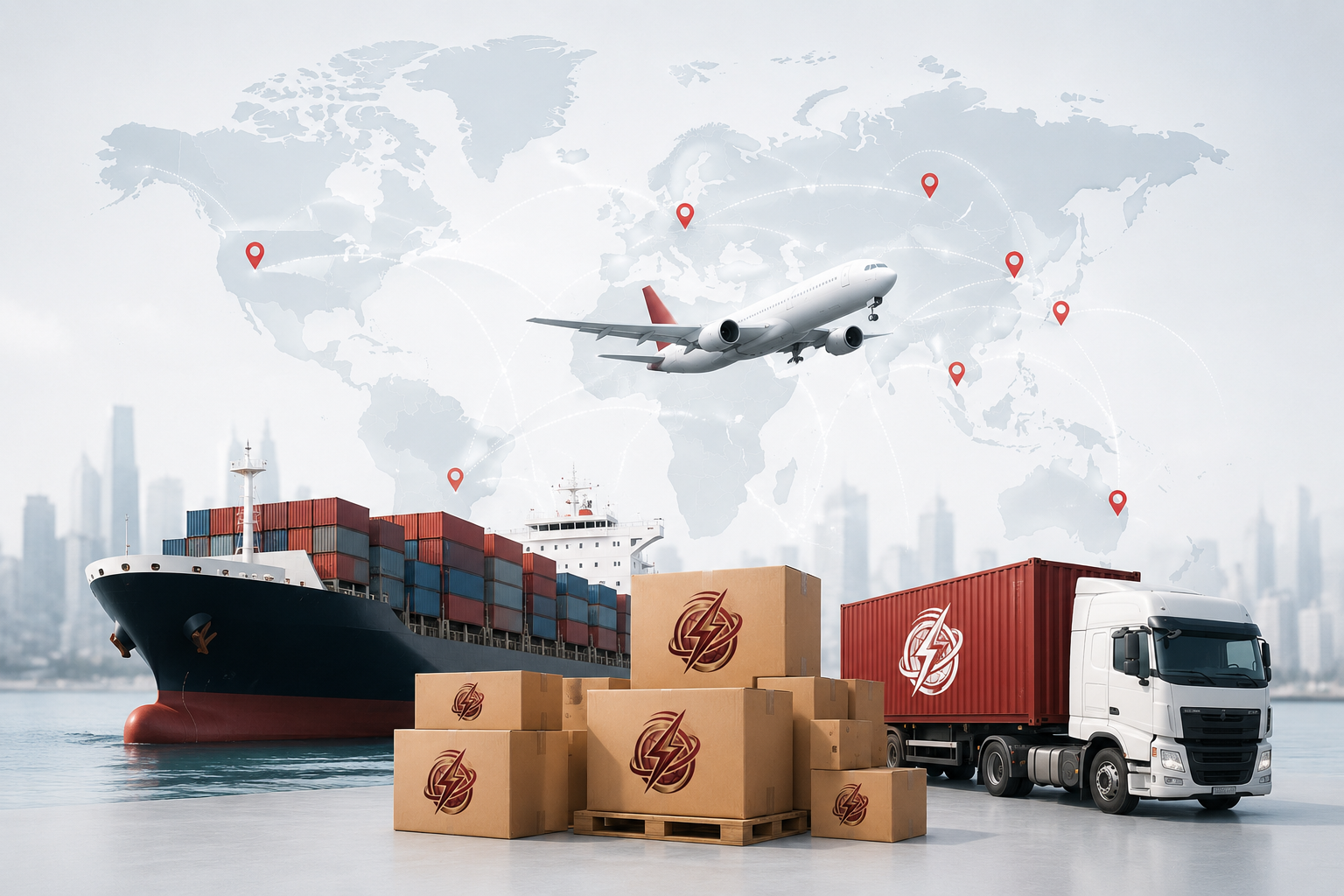
Often hear the term Freight Forwarding?
Or Forwarder?
Business owners may already be familiar with it, since they regularly need to ship goods or parcels, from small to large scale.
In the business world, shipping goods domestically or between countries requires logistics coordination among several parties.
For industry players who need to ship goods, such as exporters, importers, manufacturers and wholesalers, the term freight forwarding and the role of a forwarding company are essential to making sure cargo reaches its destination efficiently.
What Is Freight Forwarding? Here Is the General Definition
Freight forwarding is a service that arranges and manages the shipment of goods by land, sea or air.
A forwarding company acts as an expert intermediary that manages the entire logistics process, from negotiating cargo space and handling documents such as customs (customs clearance) to coordinating transport modes on behalf of the sender (shipper).
Don't confuse logistics services with freight forwarding just yet. Here's the explanation.
The Difference Between Regular Logistics Services and Freight Forwarding
Although both are involved in the distribution of goods, general logistics services and freight forwarding have different operational scopes.
So what is the difference by general definition? Here it is:
- Regular Logistics Services: Generally handle parcels or retail goods in limited volumes, with simple procedures and a focus on domestic or local areas.
- Freight Forwarding: Usually handles large or heavy goods (using heavy trucks, cargo aircraft or containers), across inter-island to international routes, and involves complex customs regulations and permit documents.
Although they differ in scale, both activities are still classified in the same category in Indonesia.
Legally, in Indonesia, under Minister of Transportation Regulation No. PM 49 of 2017, this activity is classified as Transportation Management Services (Jasa Pengurusan Transportasi, JPT).
JPT is a business intended to carry out the entire chain of receiving and dispatching goods via various modes of transport.
Based on this regulation, Freight Forward can be described as a term for the activity of sending and receiving goods using freight vehicles.
Translated literally from English, Freight Forward means passing on or forwarding a load, which can essentially be understood as a goods shipping service.
In the general understanding of both the public and working professionals, Freight Forward is often taken to mean large-scale or cargo shipping, both domestically and between countries.
Freight Forward has even become synonymous with container shipping.
The term also tends to be used for shipments between countries, such as exports and imports.
The Freight Forward business also uses several special terms.
A company that provides Freight Forward services is called a Forwarder, and the Freight Forward service itself is called Forwarding.
Because it is closely associated with containers, there are the terms FCL and LCL.
The available services include DD, DP, PD and PP.
Want to learn more about these terms? Read on.
The Main Parties in Freight Forwarding
Just like sending a parcel with a Courier Service, there is a party sending the goods, the shipping company and its courier, and the recipient.
In freight forwarding, there are also three main actors, known by the following terms:
- Shipper or Consignor: The party sending the goods, whether an individual, a manufacturing company or an exporter.
- Forwarder: The service provider that plans, coordinates and manages the entire flow of the shipment.
- Consignee: The party receiving the goods at the destination (this can be an importer or the end buyer).
During the shipping process, the Forwarder will also involve many parties, with separate parties handling the First Mile, Middle Mile and Last Mile.
Throughout the process, there are also documents that must be completed before the shipment can go ahead.
The Main Roles and Duties of a Forwarding Company
Managing an international logistics chain requires intensive handling. The operational duties of a forwarding company include:
- Route Planning and Cost Calculation: Determining the most efficient combination of transport and negotiating shipping rates (freight rate).
- Customs Documentation: Preparing export-import documents such as the Bill of Lading (B/L), Air Waybill (AWB), Packing List, Invoice and local customs documents.
- Warehouse Management and Consolidation: Managing temporary cargo storage at warehousing facilities and consolidating LCL loads.
- Cargo Space Booking (Space Booking): Securing space on ocean vessels, aircraft or cargo trains.
- Cargo Insurance and Protection: Arranging shipping insurance and handling claims if events beyond anyone's control occur (force majeure) during transit.
Freight Forwarding Services
Although the term Freight Forwarding is commonly known as the process of shipping goods abroad, Freight Forward shipments are basically divided by shipping area:
- International Forwarders for overseas or cross-border shipments
- Domestic or Regional Forwarders for long-distance shipments within the country
- Local Forwarders for short-distance shipments
The modes of transport used also vary, including land, sea and air.
However, in Indonesia the term freight forwarding is more closely associated with land and sea transport because of their complexity.
Although freight forwarding by air follows the same stages, the process is usually faster because of the urgency or need for the cargo to arrive quickly.
Freight forwarding by sea, on the other hand, is less time-critical and even uses a well-known piece of specialised equipment: the shipping container.
What sea freight forwarding services use containers?
Types of Container Load Services: FCL vs LCL
For sea and land cargo shipments, forwarding companies offer two loading options based on volume and scale of need.
Costs are no longer calculated per kilogram as with ordinary shipments, but in CBM, or cubic metres.
There are also 2 options for container rental: you can rent a whole container or share one with other shippers.
Here is a detailed table of these services
| Parameter | FCL (Full Container Load) | LCL (Less Container Load) |
| Definition | Rental of 1 full container unit dedicated to 1 shipper. | Goods from several shippers are combined in 1 container (sharing). |
| Quantity | Cargo or goods with a large volume, or goods with special requirements. | Goods that are not large or numerous enough to fill a whole container. |
| Cost Scheme | Fixed rate per container unit (flat rate). | Calculated by volume (CBM). |
| Practicality | Faster loading and unloading because there is no sorting of goods. | Requires time to sort goods at the forwarder's warehouse. |
Commonly Used Container Types
The choice of container is matched to the characteristics of the goods being shipped:
- Dry Container: A standard container for general dry goods (general cargo) that do not require special temperature control.
- Reefer (Refrigerated) Container: A container with a temperature-controlled cooling system for perishable commodities, such as fresh food or pharmaceutical products.
- Open Top Container: A container without a permanent roof for loading extra-tall goods.
- Flat Rack Container: A container without side walls or a roof for large, heavy or extra-wide loads (oversized cargo).
Freight Forwarding Service Schemes
To determine where a shipment of goods or cargo starts and ends, freight forwarders offer several operational options.
These are not limited to a single mode of transport.
Air, sea and land shipments can all use these service schemes.
Here is a table explaining them
| Code | Service Name | Pickup (Origin) | Handover (Destination) |
| DD | Door to Door | Picked up directly from the sender's address | Delivered to the recipient's address |
| DP | Door to Port | Picked up directly from the sender's address | Delivered to the destination port/airport |
| PD | Port to Door | Dropped off by the sender at the origin port/airport | Delivered to the recipient's address |
| PP | Port to Port | Dropped off by the sender at the origin port/airport | Collected by the recipient at the destination port/airport |
Now that you know the definitions, services, schemes and parties involved, what about freight forwarding services?
For those who need to ship goods without the hassle of handling every part of the process, here are the benefits of using a freight forwarder.
Benefits of Using a Freight Forwarder
With so many parties, service types, complex documents and everything else involved in shipping, using the expertise of a forwarder adds a lot of value to your business's operational flexibility.
You won't need to deal with the following:
- Handling Complex Procedures: Minimises the risk of goods being held at customs due to non-compliance with cross-border regulations.
- Managing Transport Modes and Routes: The wide network of a logistics agent or forwarding company makes it possible to choose the best route at a competitive price.
- Cargo Visibility and Monitoring: No need to contact each carrier one by one, making it easy for cargo owners to track the position and estimated arrival of their cargo in a controlled way.
An integrated transport network, an understanding of customs regulations and the right fleet management make freight forwarding a key solution for the smooth flow of goods in today's global supply chain.
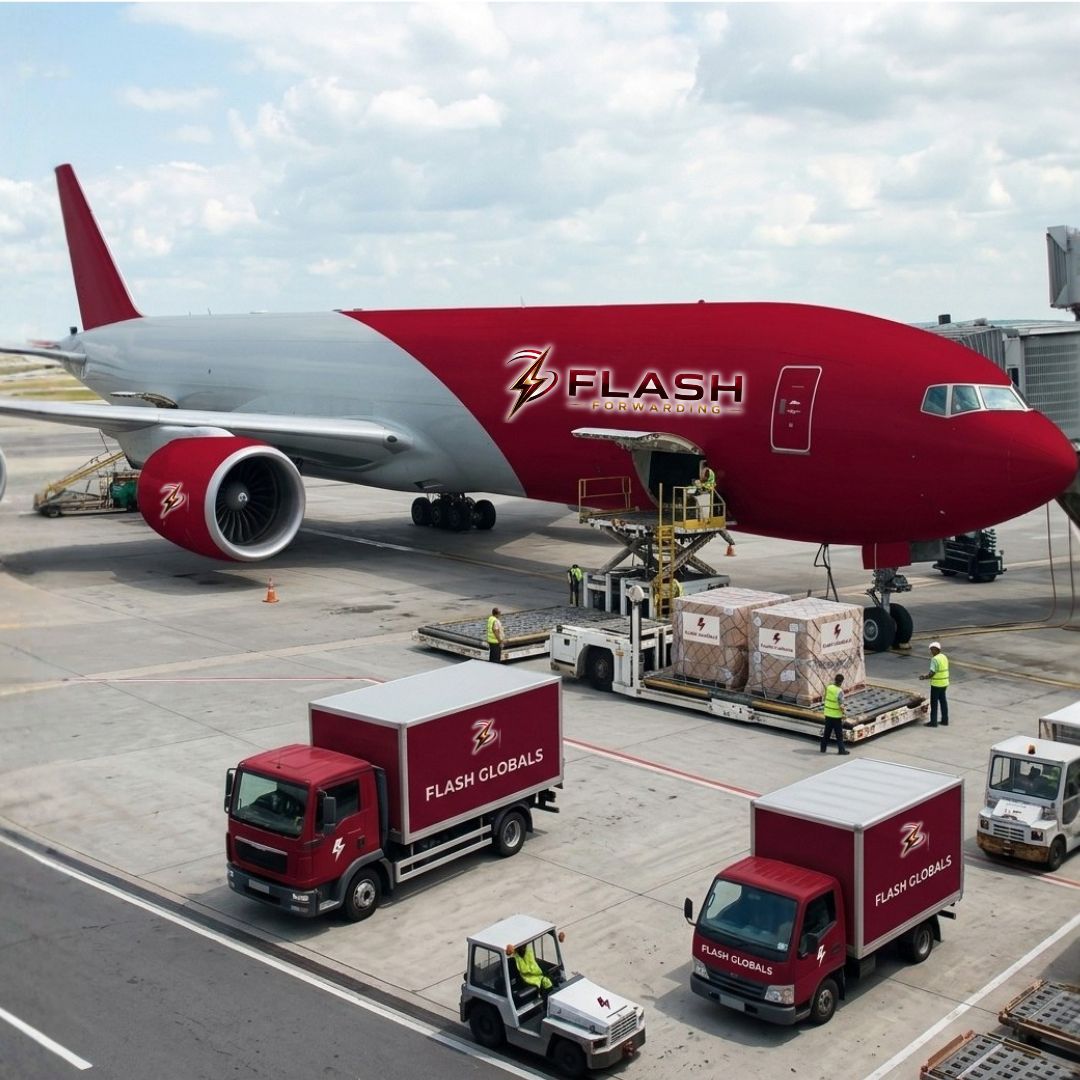
Flash Forwarding
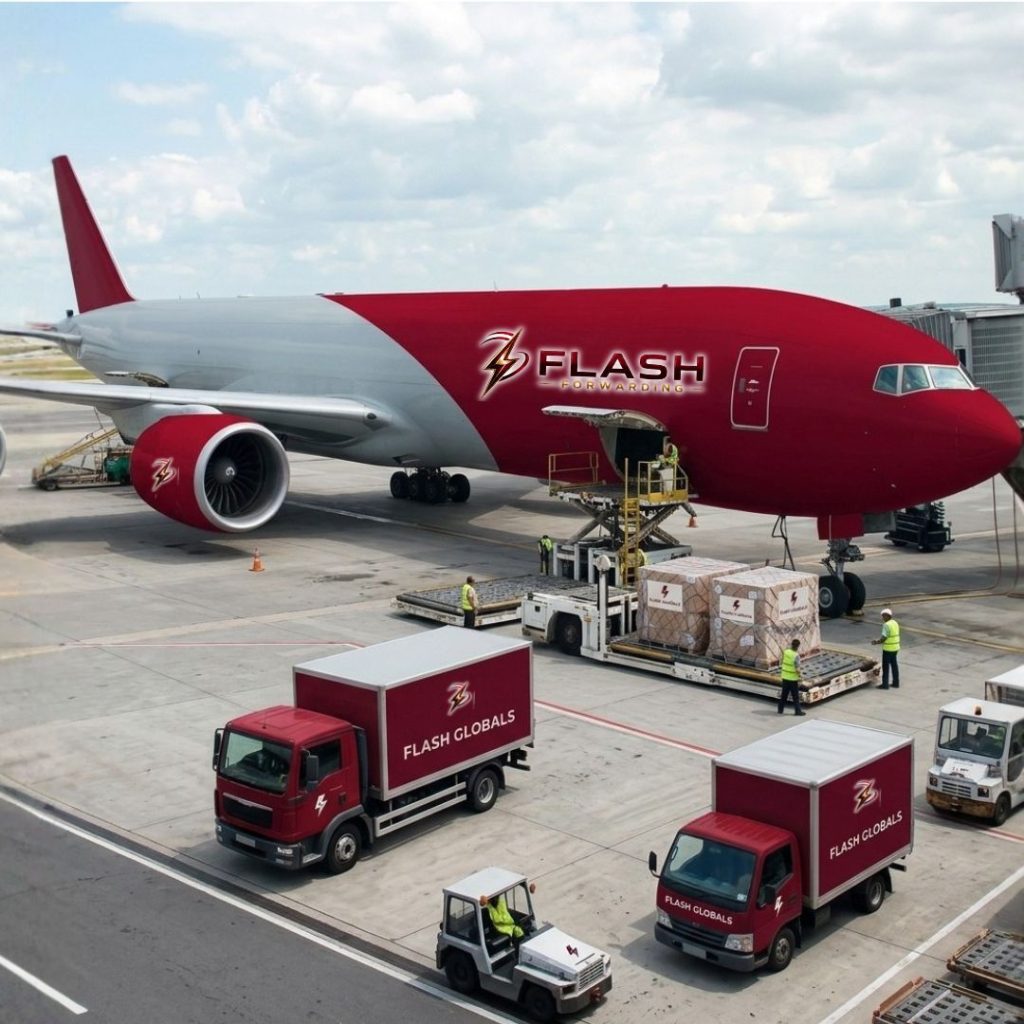
Flash Global offers freight forwarding services, particularly by land and air.
In collaboration with Beyond by TheLorry, Flash Forwarding is the freight forwarding service from Flash Globals.
Flash Forwarding can send parcels abroad and also handles international moving.
Services include Sending Parcels to Malaysia, Sending Goods to Singapore, Sending Goods to Saudi Arabia
Written by: Bani Darmawan
Last updated: 10 September 2026