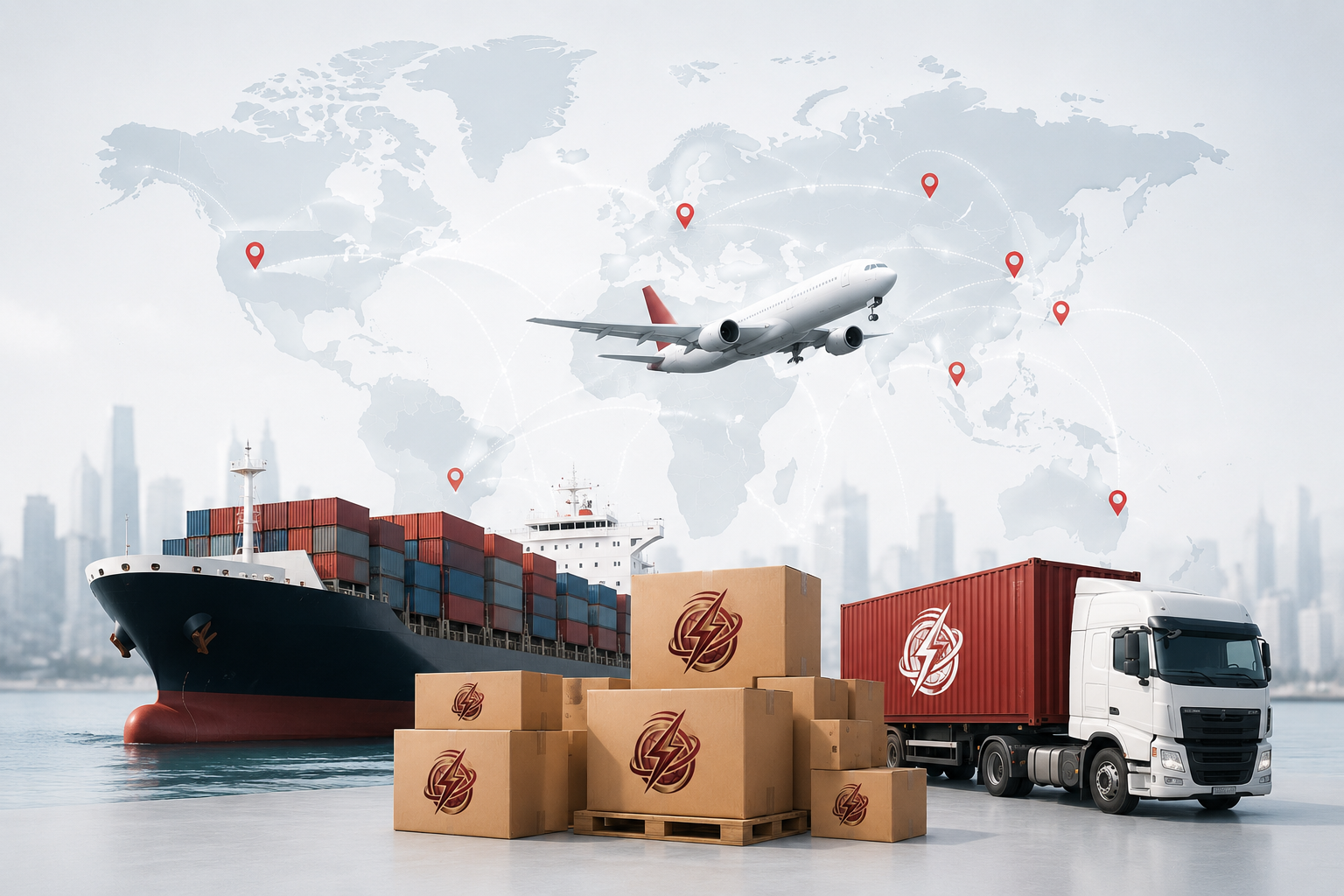
Ever been shopping, tapped the “Buy” button on your phone, and WOW!
Just a few days, or even a matter of hours later, the item is already at your front door?
This process that seems instant and almost magical actually involves a giant network working behind the scenes.
This network is what we know as Logistics.
But on TV or news sites, the word logistics is often used to mean the supplies needed at the scene of an event.
That isn't actually wrong, but what it really refers to is how those supplies are sent to their destination.
So, to make it clear, let's have a relaxed but in-depth chat about what logistics is, what it aims to do, and just how bright career opportunities in this field really are!
So What Exactly Is Logistics?
Many people think logistics is simply a “delivery service”.
In fact, the definition is much broader than that.
Put simply, logistics is the entire chain of processes, from planning and execution to the control of the flow of goods, services and information.
This process runs from the starting point (the source of raw materials) all the way to the end point (your hands, as the consumer).
If we turn to the professional literature, the
Council of Supply Chain Management Professionals (CSCMP) defines logistics as the part of supply chain management (Supply Chain Management) that plans, implements and controls the effective and efficient flow of goods and information from the point of origin to the point of consumption in order to meet customer requirements.
Now a new term has popped up: there's logistics and there's supply chain. What's that about?
Logistics vs Supply Chain: Are They Really Different?
Of course they are!
A Supply Chain (rantai pasok in Indonesian) is a large-scale activity involving collaboration between many parties (from the farmer who grows the crop, who passes it to the rice mill, which sends the rice to a distributor, which in turn sends it on to shops until it finally reaches you).
Meanwhile, logistics is just one crucial “department” within that bigger picture, focusing on the physical movement of goods and their storage.
Put simply, when an activity involves many parties, the delivery process falls under the term “Supply Chain”.
But if it's only about one party moving goods, it's called logistics, for example Company A's logistics, which doesn't include Distributor B's logistics.
Let's dig deeper into logistics.
Why Is Logistics So Important?
The logistics process within a supply chain is really important, you know…
Why???
In both academic and practical settings, the goals of logistics are often linked to the concept of “The 7 R’s of Logistics” (the 7 “Right” Principles).
These 7 principles were popularised by supply chain management expert John J. Coyle and colleagues.
According to these 7 principles, a successful logistics system must deliver these 7 things:
- Right Product (the correct product)
- Right Quantity (the correct amount)
- Right Condition (the correct condition, undamaged)
- Right Place (the correct location)
- Right Time (the correct timing)
- Right Customer (the correct customer)
- Right Cost (the correct, efficient cost)
If any of these 7 aren't met, the flow of goods, services or information will be disrupted.
For example, if one principle, Right Time, isn't met, such as in wartime, it will affect the other principles.
In wartime, the products that arrive may be the wrong ones, the quantity may fall short, they may arrive in poor condition, the destination keeps changing, the goods don't arrive at the agreed time, shipping costs go up because the location keeps changing, and the goods may not even reach the right customer (ending up with the enemy).
Just imagine: goods meant for our side end up with the enemy instead!
That shows how important these 7 logistics points are, as they aim to keep business operations running as efficiently as possible while keeping customer satisfaction at its highest.
Because no matter how good your product is, if it arrives late or gets damaged on the way, customers won't come back, right?
The Benefits of Having a First-Rate Logistics System
For a business, investing in a well-organised logistics system isn't just about spending money on operations; it actually brings a lot of benefits…
Even though it often goes unseen and unappreciated, logistics can determine a company's effectiveness and costs, and can even boost its branding.
When we buy something and it doesn't arrive on time, we're bound to grumble, right???
And if the delivery takes ages and the item arrives damaged because it wasn't shipped safely, we'll be even more annoyed!
That's why business owners, from small to large, need a first-rate logistics system, whether through a partner or their own in-house system.
Here are the benefits of having a reliable logistics system:
- Beating the Competition (Competitive Advantage): In this fast-paced era, businesses that can ship goods faster and more safely automatically become consumers' first choice.
- Cost Efficiency: With optimal management and delivery, companies can drastically cut warehouse and fuel costs.
- Unlimited Expansion: Reliable logistics allows local businesses to break into global markets. With cross-border shipping strategies such as shipping abroad, there's no longer anything stopping a brand from reaching new customers overseas.
- Soaring Reputation and Credibility: Consistently safe, on-time delivery is the key to building loyalty and a positive image in customers' eyes.
Starting to see the benefits of having a logistics system?
Let's go deeper and look at the stages of logistics…
What Are the Main Stages of Logistics?
For goods to reach you safely, they pass through several interconnected stages.
Taken as a whole, these stages are called Full Mile Logistics
Here's the explanation of Full Mile from fareye.com
Full Mile is an approach to the flow of goods across the entire supply chain network (end-to-end supply chain) that integrates three main segments: First Mile, Middle Mileand Last Mile Logistics into a single connected system.
First Mile
The definition of First Mile from medium.com is the initial movement of goods, starting from the owner of the goods, such as a manufacturer, to an initial storage facility, such as a fulfillment center or consolidation warehouse.
This phase sometimes uses a courier service or a trucking service, depending on the volume of goods.
For example, a textile factory in Bandung produces 5,000 garments.
The process of a fleet of trucks collecting the goods from the factory in Bandung and taking them to a consolidation warehouse in Jakarta is the First Mile.
Middle Mile
As for the Middle Mile, or Mid-Mile:
according to onro.io's definition of Middle Mile, it is the phase in which goods move from warehouse to warehouse, usually from a main warehouse/distribution center (distribution center) to a sorting center (sorting center) or a regional hub closer to the destination.
This phase usually uses a trucking service or truck delivery, since the goods are typically in large quantities.
If the warehouse is further away, for example on another island or in the case of international shipping, besides trucking you can also use a freight forwarding service or freight forwarder that operates sea and air fleets.
For example, a parcel of clothing from a Jakarta warehouse is first sent by truck to a Surabaya warehouse, then by sea cargo ship to a warehouse and distribution hub in Makassar.
Or, if it's being sent abroad, the goods are flown to a warehouse in the destination country.
This long-distance transport between cities, provinces, countries or islands is called the Middle Mile.
Last Mile
And now the final one. Can you guess?
According to the Astra blog, the definition of Last Mile Logistics is the very last stage of the distribution network, namely the physical handover of the parcel from a warehouse or local courier hub to the doorstep of the end consumer (end-consumer).
For example, continuing with the textile factory that produces clothing, a courier service takes the parcel of clothing from the warehouse or sorting hub in Surabaya straight to the buyer's home in the Ketintang area.
Full Mile Project
Besides these 3 stages, it turns out all three can also happen within one short project using just one mode of transport.
A moving service, or the process of moving house, is a short Full Mile Project. Here's how it works:
1. The trucking service picks up the goods at the old home, which counts as the First Mile
2. The transport process, while the truck is on the road, stopping at various places or, for example, boarding a ship, counts as the Middle Mile
3. The truck arrives at the new home, which counts as the Last Mile
Pretty straightforward, right?
Interested in starting a career in logistics?
Future Career Opportunities in Logistics
If you're thinking about a career in this field, it's a great decision!
With the boom in e-commerce and global trade, demand for logistics professionals has skyrocketed.
According to a McKinsey & Company report (as cited in several academic sources), the digitalisation of logistics is predicted to create millions of new jobs in the coming years.
Some promising positions you could consider include:
- Logistics Admin: Suited to those who are meticulous, organised and comfortable with data entry systems.
- Inventory / Stock Control: Responsible for making sure physical stock data matches what's in the system (software).
- Dispatcher / Transporter / Transport Planner: For strategic thinkers, this role involves planning the fastest, most efficient and cheapest routes for the delivery fleet.
- Courier / Driver / Vendor Management: This role is like HR for the logistics world: finding drivers and assigning them according to delivery needs.
- Supply Chain and Logistics Manager: A managerial role with full control over the entire cycle of goods movement, from upstream to downstream.
References & Literature
Theory & Literature:
- Council of Supply Chain Management Professionals (CSCMP). (2013). Supply Chain Management Terms and Glossary. (Reference for the definition of Logistics vs SCM).
- Coyle, J. J., Langley, C. J., Novack, R. A., & Gibson, B. J. (2016). Supply Chain Management: A Logistics Perspective. Cengage Learning. (Reference for “The 7 R’s of Logistics” theory).
- McKinsey & Company report (2022). Discusses digital disruption and projections of new job creation in the supply chain and logistics sector.
Reference Websites:
- ICDX. “Apa Itu Logistik? Pengertian, Tujuan, dan Manfaat.” Retrieved from: https://www.icdx.co.id/news-detail/publication/apa-itu-logistik-pengertian-tujuan-dan-manfaat
- SPIL. “Apa itu Logistik? Pengertian, Tujuan, dan Manfaat.” Retrieved from: https://www.spil.co.id/blogs/apa-itu-logistik-pengertian-tujuan-dan-manfaat/
- Taruna Bakti University (TBU). “Logistik Itu Apa, Sih? Yuk Mulai dari Sini!” Retrieved from: https://tbu.ac.id/logistik-itu-apa-sih-yuk-mulai-dari-sini/
- Mekari Desty. “Apa itu Logistik? Rahasia Bisnis Online Kirim Cepat & Hemat.” Retrieved from: https://desty.mekari.com/blog/apa-itu-logistik
- Terralogiq. “Mengenal Tujuan Aktivitas Logistik yang Dilakukan Perusahaan.” Retrieved from: https://terralogiq.com/aktivitas-logistik/
- KitaLulus. “Pekerjaan Logistik: Pengertian, Tugas, Gaji, dan Contoh Profesi.” Retrieved from: https://www.kitalulus.com/blog/seputar-kerja/pekerjaan-logistik-adalah/
- Medium. “First, Mid and Last Mile: Understanding the Logistics Industry” retrieved from https://flashboxco.medium.com/first-mid-and-last-mile-understanding-the-logistics-industry-4b2cfce9ef85
- Raunaq Singh. “Mastering First, Middle, and Last Mile Delivery for End-to-end Supply Chain Success” retrieved from https://fareye.com/resources/blogs/first-middle-last-mile-delivery-logistic
- Astra, Selog. “Perbedaan First Mile, Medium Mile dan Last Mile Delivery” retrieved from https://www.selog.astra.co.id/blog/info/perbedaan-first-mile-medium-mile-dan-last-mile-delivery
Author: Bani Darmawan
Last updated: 2 September 2026